

How Autonomous Vehicle Technology Could Change Nevada Injury Law
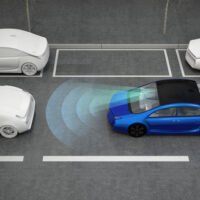
Self-driving cars are no longer science fiction. They are showing up on Nevada roads right now, and Las Vegas has been at the center of autonomous vehicle testing for years. While this technology promises to reduce human error on the road, it also raises a question that many accident victims and their families may soon be asking: if a self-driving car hurts you, who is responsible?
What Nevada Law Already Says About Autonomous Vehicles
Nevada was actually the first state in the country to legalize autonomous vehicles, and the state has built a legal framework to govern them. Under Nevada Revised Statutes Chapter 482A, autonomous vehicles are permitted to operate on public highways, and a fully autonomous vehicle can legally run without a human driver behind the wheel. NRS 482A.200 specifically states that no traffic law in Nevada shall require a human driver to operate a fully autonomous vehicle when its automated driving system is engaged.
That framework covers operation and testing, but it leaves a significant gap when it comes to what happens after a crash. If you are hurt in a collision with a self-driving car, figuring out who to hold accountable becomes far more complicated than a typical car accident case.
Who Could Be Liable When a Self-Driving Car Causes an Injury?
This is where the legal landscape gets genuinely complex. In a traditional car accident, liability usually points to the at-fault driver. With autonomous vehicles, there may be no human driver making decisions at all. That means potential liability could fall on several different parties, depending on the circumstances:
- The vehicle’s manufacturer, if a defect in the automated driving system caused the crash
- The software developer, if the programming failed to respond appropriately to road conditions
- A third-party company that modified the vehicle’s autonomous technology after it left the factory
- The human owner or operator, if they failed to maintain the vehicle properly or overrode safety systems
- A rideshare or transportation company, if the autonomous vehicle was being used as part of a commercial fleet
Nevada law does provide some protections for manufacturers when a third party modifies a vehicle to add autonomous capabilities, but that provision does not eliminate manufacturer liability across the board. Each case will turn on its specific facts.
How This Technology Shifts the Way Injury Claims Are Investigated
When a human driver causes a crash, investigators look at things like speed, distraction, and reaction time. In an autonomous vehicle crash, the investigation expands dramatically. Data from the vehicle’s onboard systems, software logs, sensor records, and communications between the vehicle and outside infrastructure may all become critical evidence. Insurance companies and manufacturers will have teams of engineers and lawyers working to minimize their exposure. As an injured person, you will want someone on your side who understands how to gather and use that evidence effectively.
Speak with a Las Vegas Personal Injury Attorney About Your Case
The technology is advancing faster than the law can keep up, and that makes autonomous vehicle injury cases some of the most legally complex claims on the road today. If you or someone you love has been hurt in a crash involving a self-driving or semi-autonomous vehicle, we encourage you to reach out to us right away. At Mainor Ellis Injury Lawyers, we represent injury victims throughout Southern Nevada and are prepared to take on the manufacturers, software developers, and insurers who may be responsible for your injuries. Contact our Las Vegas personal injury lawyers today for a free consultation. We work on a contingency fee basis, so you pay nothing unless we win.
Source:
leg.state.nv.us/nrs/nrs-482a.html
